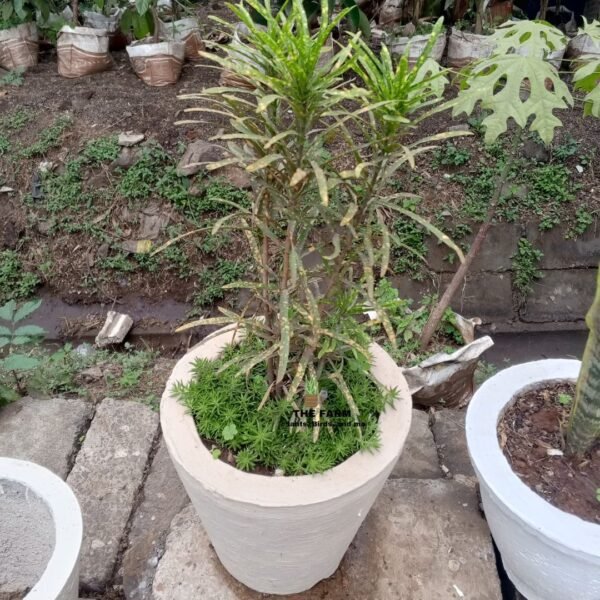
Rubber Plant in a Stylish White Fiberglass Planter
KSh 8,700.00 Original price was: KSh 8,700.00.KSh 7,499.00Current price is: KSh 7,499.00.
Stylish and Functional Decor
Embrace elegance with the rubber plant, a top choice among the best indoor plants. Presented in a refined white fiberglass planter, this plant not only purifies the air but also enhances the aesthetic appeal of any room. Its glossy, dark green leaves are a visual treat, making it perfect for home and office spaces.
Exceptional Growth and Care
The rubber plant is favored for its easy maintenance. It thrives in indirect sunlight and requires minimal watering, making it an ideal option for busy individuals. Known scientifically as Ficus elastica, this plant can grow impressively tall, offering a touch of nature indoors.
Why Choose a Rubber Plant?
This versatile indoor plant not only improves air quality but also brings a sense of tranquility. For more information on the benefits and care of rubber plants, visit The Farm.
| Weight | 24 kg |
|---|---|
| plant type | Rubber plant |
Only logged in customers who have purchased this product may leave a review.
You may also like…
Monstera plants in kenya
Rubber Plant seedling.
Related products
Aglaonema Pearl in a Spherical Fiber Glass Planter
Key Features of the Aglaonema Pearl in a Spherical Fiber Glass Planter
- Striking variegated leaves with silver, green, and cream hues
- Low-light tolerance, ideal for indoor spaces
- Low-maintenance care with minimal watering needs
- Air-purifying properties for a healthier environment
- Sleek and durable spherical fiber glass planter
- Perfect for homes and offices in Kenya
Alocasia Wentii in a Concrete Pot
Key Features
- Striking Foliage: Features large, glossy, deep green leaves with a bronze underside, creating a bold and dramatic visual effect.
- Compact and Elegant: The plant’s compact growth habit makes it suitable for indoor tables, corners, or outdoor patios.
- Concrete Pot Design: The modern concrete pot enhances the plant’s aesthetic, providing stability and complementing a variety of interior styles.
- Low Maintenance: Easy to care for, making it an excellent choice for both beginners and experienced gardeners.
- Air Purifying: Naturally filters the air, contributing to a fresher and healthier indoor environment.
Chinese Money Plant in a Fiberglass Planter
Key Features of the Chinese Money Plant (Local Name: Mti wa Pesa)
- Symbolizes prosperity and good fortune
- Round, coin-shaped leaves that are visually striking
- Easy to maintain, needing minimal watering and indirect light
- Air-purifying properties for improved indoor air quality
- Stylish fiberglass planter, lightweight and durable
- Ideal for homes and offices in Kenya, enhancing décor while promoting positive energy
Cordyline Plant (Good Luck Plant)
Introduction
The Cordyline, or Good Luck Plant, is a versatile, low-maintenance plant known for its stunning foliage and association with positive energy and fortune. Whether placed in a garden, patio, or home, this vibrant plant adds a splash of color and tropical flair to any space.
Benefits
- Aesthetic Appeal: The vivid, colorful leaves make Cordyline an excellent decorative plant for brightening up gardens and indoor spaces.
- Symbolism: Considered a good luck charm, it's often planted around homes for protection and prosperity.
- Low Maintenance: Cordyline requires minimal care, making it ideal for both experienced gardeners and beginners.
- Air Purifier: When kept indoors, it helps purify the air by filtering out harmful toxins, enhancing indoor air quality.
- Variety: With several species and color variations, Cordyline offers flexibility in landscape design or home decoration.
Conditions for Optimal Growth
- Soil: Prefers well-draining, slightly acidic soil, rich in organic matter.
- Sunlight: Thrives in bright, indirect sunlight. Outdoors, it prefers partial shade, but some species can tolerate full sun.
- Watering: Needs regular watering, particularly during the growing season (spring and summer). Allow the soil to dry slightly between waterings to avoid root rot.
- Temperature: Warm, humid conditions are ideal, though it can tolerate temperatures down to 60°F (16°C). Frost or cold drafts should be avoided.
- Fertilization: Use a balanced liquid fertilizer during the growing season to promote healthy foliage growth.
Conclusion
The Cordyline, or Good Luck Plant, is a highly decorative and meaningful plant that enhances any garden or home with its vibrant colors and tropical charm. Whether you seek its aesthetic value or its cultural significance as a symbol of prosperity, this low-maintenance plant is sure to bring beauty and positivity to your space. With proper care, the Cordyline will thrive and flourish, continuing to bring joy and good luck for years to come.
Croton Plant
Introduction
The Croton plant is a stunning and bold addition to any garden or indoor plant collection. Known for its vibrant, multicolored leaves, this tropical beauty brings an explosion of color and life to any space. Its variety of leaf shapes and striking hues make it a favorite among plant enthusiasts looking for something unique and eye-catching.
Benefits
- Aesthetic Appeal: The vibrant colors and varied leaf shapes of Croton make it an excellent choice for adding visual interest to gardens or homes.
- Air Purification: Croton helps filter indoor air, improving air quality by removing pollutants like formaldehyde and benzene.
- Low Maintenance: Despite its dramatic appearance, Croton requires relatively little care once its growing conditions are met.
- Versatile Use: It can be grown as a houseplant, or in outdoor gardens as a border or accent plant.
- Durable: With proper care, Croton can be a long-lasting, robust plant that provides year-round color.
Conditions for Optimal Growth
- Soil: Croton prefers well-draining soil rich in organic matter. A mix of peat-based potting soil or loamy soil works best.
- Sunlight: Bright, indirect light is essential for Croton to maintain its vivid colors. While it can tolerate some shade, lack of light can dull its foliage.
- Watering: Keep the soil evenly moist but not waterlogged. Crotons like high humidity, so misting the plant occasionally helps. Allow the top layer of soil to dry between waterings.
- Temperature: Best grown in warm environments between 60°F and 85°F (16°C to 29°C). Avoid cold drafts and temperatures below 50°F (10°C), as Croton is sensitive to cold.
- Fertilization: Feed with a balanced liquid fertilizer once a month during the growing season (spring and summer). Reduce feeding in fall and winter.
Conclusion
The Croton plant is a bold, eye-catching option for anyone looking to add color and texture to their garden or home. Its dazzling foliage, combined with its low maintenance needs, makes it an ideal choice for both indoor and outdoor gardening. With proper care, the Croton plant will reward you with vivid, ever-changing colors, providing year-round tropical beauty to any space.
Eugenia Plant
Introduction
The Eugenia plant is a beautiful, evergreen shrub that is prized for its ability to be shaped into intricate designs or used as a lush hedge. Its fast growth and ease of maintenance make it a favorite for landscaping, while its small fruits offer a delightful, edible bonus.
Benefits
- Ornamental Appeal: The plant's dense, glossy foliage is perfect for creating formal gardens, privacy screens, or decorative topiaries.
- Edible Fruits: Some species produce small, cherry-like fruits that are both ornamental and edible, adding a unique touch to the garden.
- Low Maintenance: Once established, Eugenia requires minimal care and is resistant to most pests and diseases.
- Versatile Landscaping: It can be grown as a hedge, privacy screen, container plant, or topiary, adding greenery to a variety of spaces.
- Fast Growth: It’s a great option for those looking to quickly fill out hedges or create a green backdrop in their gardens.
Conditions for Optimal Growth
- Soil: Prefers well-draining soil rich in organic matter. It can tolerate a variety of soils but thrives in slightly acidic conditions.
- Sunlight: Grows best in full sun to partial shade. For optimal growth and fruit production, provide at least 6 hours of sunlight daily.
- Watering: Regular watering is required, especially during the growing season. Allow the soil to dry slightly between waterings to prevent waterlogging.
- Temperature: Best suited for warm, tropical, and subtropical climates (USDA zones 9-11). It can tolerate mild frost but should be protected from freezing temperatures.
- Pruning: Prune regularly to maintain shape, especially when used for topiaries or hedging. Pruning encourages denser growth and helps control its size.
Conclusion
The Eugenia plant is a fantastic choice for gardeners looking for a versatile, fast-growing shrub that serves both ornamental and practical purposes. Its lush, evergreen foliage and ease of pruning make it perfect for hedging, topiary, or container gardening, while its edible fruits add an extra layer of interest. With the right care, the Eugenia plant can be a beautiful and functional addition to any landscape.
Ficus Benjamina
Key Features of the Ficus Benjamina
- Elegant, arching branches with glossy green leaves
- Ideal for both indoor and outdoor environments
- Air-purifying properties that improve indoor air quality
- Versatile plant that can be pruned to suit any space
- Thrives in bright, indirect light with regular watering
- Low maintenance, perfect for homes and offices
Sansevieria Trifasciata Green Hahnii Snake Plant in a Plastic Planter
Key Features of the Snake Plant (Local Name: Ndovu)
- Compact and stylish, fitting small spaces
- Deep green leaves with elegant variation
- It requires minimal care and infrequent watering
- Air-purifying abilities for healthier indoor air
- Thrives in indirect light and low-light conditions
- Durable plastic planter for easy placement and mobility


Reviews
There are no reviews yet.