

Ocimum Basilicum – Purple Basil Plant
Original price was: KSh 550.00.KSh 500.00Current price is: KSh 500.00.
- Botanical Name: Ocimum basilicum
- Common Name: Purple Basil
- Plant Type: Culinary and ornamental herb
- Distinctive purple to burgundy foliage
- Aromatic edible leaves
- Fast-growing under suitable conditions
- Suitable for pots and containers
- Ideal for kitchen and herb gardens
- Attractive addition to ornamental edible gardens
- Can be harvested repeatedly
- Produces flowering spikes when mature
- Suitable for warm tropical climates
Ocimum Basilicum – Purple Basil Plant
Add rich colour, fragrance, and culinary value to your garden with Ocimum basilicum, commonly known as Purple Basil. This attractive herb features deep purple to burgundy foliage and the familiar aromatic scent associated with basil, making it useful both as an edible herb and as an ornamental plant.
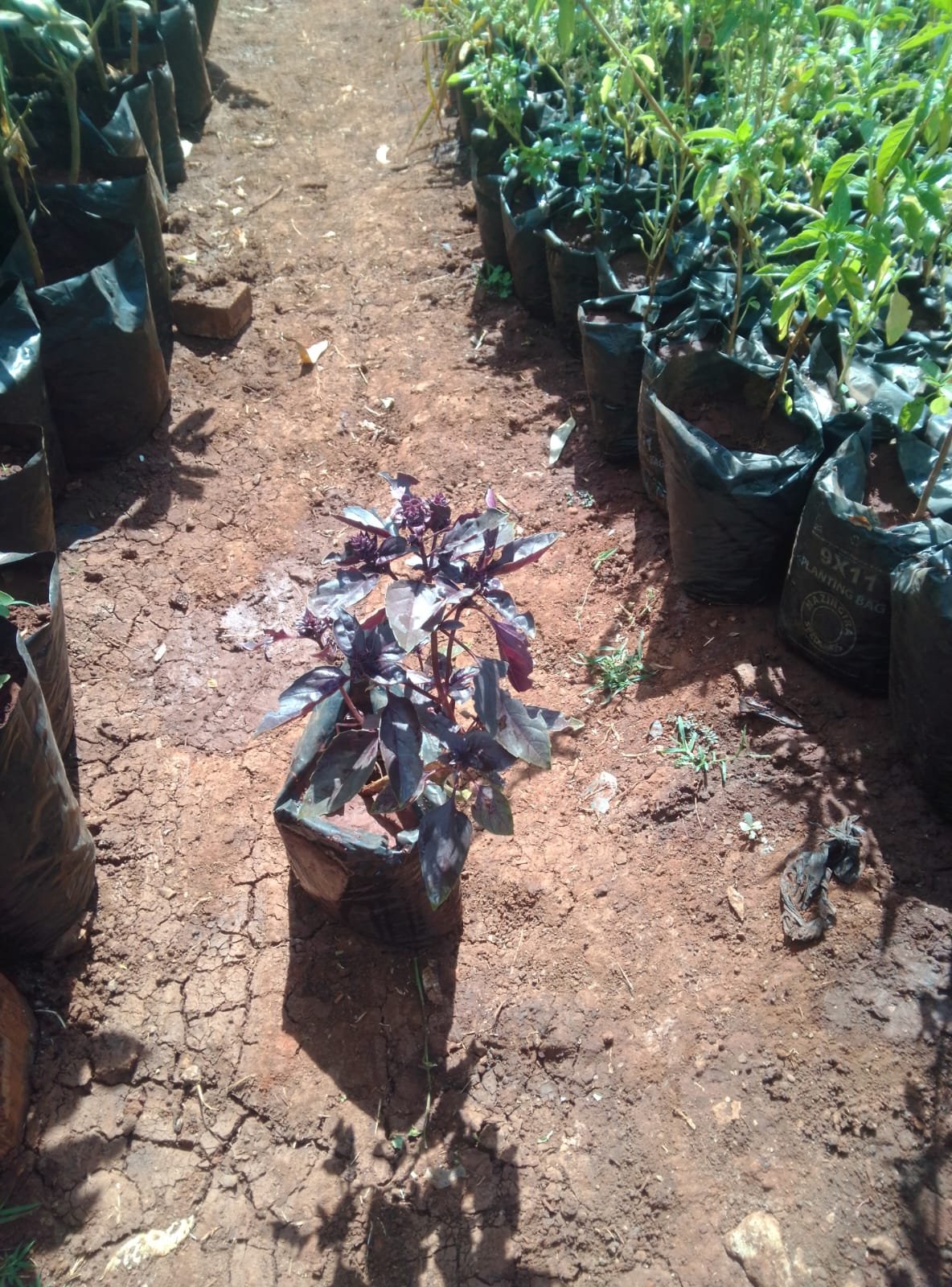
The plant shown in the image has distinctive dark purple leaves and an upright, bushy growth habit, making it suitable for kitchen gardens, pots, balconies, raised beds, and decorative edible landscapes.
Product Description
Ocimum basilicum Purple Basil is an aromatic culinary herb valued for its colourful foliage and versatile use in cooking. Its dark leaves give gardens and containers a striking contrast while still providing the fresh basil flavour used in many dishes.
Purple basil can be harvested regularly for fresh use in salads, sauces, pasta dishes, garnishes, marinades, and other recipes. The leaves can also be used to add colour to culinary presentations.
It performs best in warm conditions with plenty of sunlight and fertile, well-drained soil. Regular pruning and harvesting help keep the plant compact and encourage more branching.
When allowed to mature, the plant produces flower spikes that can attract bees and other beneficial pollinators.
Only logged in customers who have purchased this product may leave a review.
Related products

Angel wing begonia seedlings
Key Features
- Brown Foliage: Features glossy, brown leaves that add a bold and elegant contrast to gardens and containers, complementing the bright blooms.
- Vibrant Flowers: Produces blooms in shades of red, pink, white, or orange, standing out beautifully against the brown foliage.
- Compact Growth: Ideal for borders, pots, and hanging baskets, making it versatile for different planting locations.
- Low Maintenance: Easy to care for, making it perfect for beginner and busy gardeners alike.
- Adaptable Placement: Suitable for both indoor and outdoor environments, offering flexibility in use.


Coleus in Kenya
Key Features of Coleus
- Local Name: Mbarika
- Scientific Name: Coleus blumei or Plectranthus scutellarioides
- Growth Habit: Bushy, with a wide range of leaf colors and patterns
- Sunlight: Partial to full shade
- Watering Needs: Regular watering; keep the soil moist but not soggy
- Soil Type: Well-drained, fertile, loamy soil
- Maintenance Level: Low
- Ideal Temperature: 18°C - 30°C
- Propagation: Easy from cuttings
Use in Kenya
Coleus is a popular plant in Kenyan homes, gardens, and landscapes, often used to add color and texture to outdoor and indoor settings. Its ease of growth and maintenance makes it a preferred choice for anyone looking to brighten up their space with minimal effort. The local love for Mbarika continues to grow, as it not only beautifies spaces but also embodies the vibrant spirit of Kenyan gardening culture.

Cordyline Fruticosa Seedling
Key Features
- Colorful Foliage: Features vibrant, multi-colored leaves in shades of green, pink, red, and purple, adding a tropical flair.
- Compact Size: Ideal for small pots or garden beds, making it suitable for various planting arrangements.
- Versatile Placement: Can be grown indoors or outdoors, providing flexibility in design and style.
- Low Maintenance: Requires minimal care, making it perfect for beginners or those with busy lifestyles.
- Air Purifying: Helps improve indoor air quality, contributing to a healthier environment


Reviews
There are no reviews yet.