
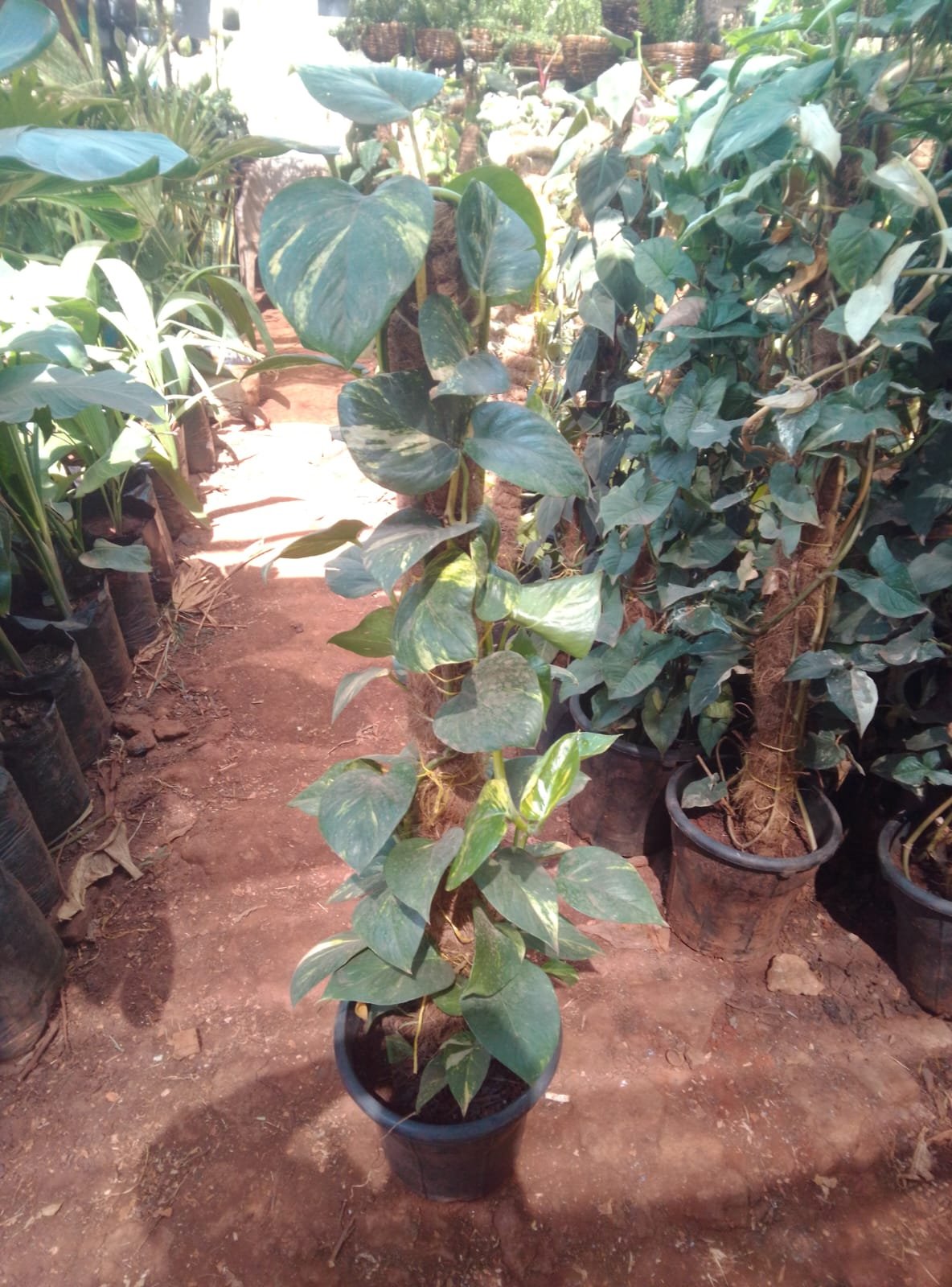

Epipremnum Aureum – Golden Pothos Plant
KSh 3,500.00 Original price was: KSh 3,500.00.KSh 3,000.00Current price is: KSh 3,000.00.
- Botanical Name: Epipremnum aureum
- Common Names: Golden Pothos, Money Plant, Devil’s Ivy
- Plant Type: Evergreen climbing and trailing vine
- Attractive heart-shaped leaves
- Green foliage with yellow or cream variegation
- Can be grown indoors or outdoors in suitable conditions
- Suitable for climbing poles and supports
- Can also trail from hanging baskets
- Fast-growing under good conditions
- Easy to maintain
- Ideal for homes, offices, balconies, and shaded gardens
- Excellent tropical decorative plant
Epipremnum Aureum – Golden Pothos Plant
Add lush tropical greenery to your home, office, balcony, or garden with Epipremnum aureum, commonly known as Golden Pothos, Money Plant, or Devil’s Ivy. It is one of the most popular climbing and trailing plants because of its attractive heart-shaped leaves, easy-care nature, and ability to grow in a wide range of indoor and outdoor conditions.
As shown in the image, this plant can be trained to climb on a support, moss pole, tree trunk, or wall, allowing it to develop larger leaves and a beautiful tropical appearance.
Product Description
Epipremnum aureum is a fast-growing evergreen climbing vine with glossy green leaves that often feature yellow or cream variegation. It is highly versatile and can be grown as a trailing plant in hanging baskets, as a tabletop plant, or trained vertically on a pole or other support.
When given a climbing structure, the plant can produce larger and more impressive leaves, making it an excellent choice for decorative indoor displays and tropical landscaping.
Golden Pothos is especially popular because it is relatively low maintenance and can tolerate a range of light conditions. However, bright indirect light helps maintain stronger growth and more attractive variegation.
| plant type | pothos/money plant |
|---|
Only logged in customers who have purchased this product may leave a review.
Related products
Alocasia Brisbanensis plant seedling.
Alocasia Micholitziana ‘Frydek’ (Green Velvet) seedling.
Key Features of Alocasia Micholitziana 'Frydek'
- Velvety Texture The standout feature of Alocasia ‘Frydek’ is its soft, velvety leaves. The deep green foliage contrasts beautifully with the sharp white veins, creating an eye-catching display that adds luxury and elegance to any indoor space.
- Arrow-Shaped Leaves The large, arrow-shaped leaves are one of the most distinctive characteristics of this plant. Each leaf can grow up to 18 inches long, making it a striking addition to any plant collection. The unique shape, combined with the velvet texture, gives it a sculptural quality that adds depth and dimension to any room.
- Compact Growth Unlike some other Alocasias, the ‘Frydek’ tends to maintain a more compact growth habit, reaching around 2 to 3 feet tall indoors. This makes it an ideal choice for homes or apartments with limited space.
- Tuberous Growth Alocasia ‘Frydek’ grows from underground tubers, which store nutrients and help the plant survive during periods of dormancy. These tubers also make it easy to propagate the plant, either by dividing the tubers or growing new plants from cuttings.
- Dormancy Like many tropical plants, Alocasia ‘Frydek’ may enter a period of dormancy in the winter. During this time, its growth may slow down, and it may even lose some leaves. This is normal, and the plant will resume growth in the spring. Reduce watering during this period and avoid fertilization.
- Toxicity It's important to note that Alocasia ‘Frydek’ is toxic to both pets and humans if ingested. The plant contains calcium oxalate crystals, which can cause irritation, swelling, and discomfort in the mouth and throat. Be sure to keep it out of reach of curious pets and small children.
Coleus Seedling
Key Features of Coleus
- Local Name: Mbarika
- Scientific Name: Coleus blumei or Plectranthus scutellarioides
- Growth Habit: Bushy, with a wide range of leaf colors and patterns
- Sunlight: Partial to full shade
- Watering Needs: Regular watering; keep the soil moist but not soggy
- Soil Type: Well-drained, fertile, loamy soil
- Maintenance Level: Low
- Ideal Temperature: 18°C - 30°C
- Propagation: Easy from cuttings
Use in Kenya
Coleus is a popular plant in Kenyan homes, gardens, and landscapes, often used to add color and texture to outdoor and indoor settings. Its ease of growth and maintenance makes it a preferred choice for anyone looking to brighten up their space with minimal effort. The local love for Mbarika continues to grow, as it not only beautifies spaces but also embodies the vibrant spirit of Kenyan gardening culture.
Cordyline Fruticosa Seedlings in Kenya
Key Features of Cordyline Fruticosa Seedlings (Mti Wa Maisha or Ti Plant)
- Local Name: Mti Wa Maisha or Ti Plant
- Scientific Name: Cordyline fruticosa
- Growth Habit: Upright, bushy plant with long, colorful leaves
- Sunlight: Partial shade to full sun
- Watering Needs: Moderate; keep soil moist but not waterlogged
- Soil Type: Well-drained, loamy soil enriched with organic matter
- Maintenance Level: Low; occasional pruning for optimal appearance
- Ideal Temperature: 20°C - 30°C
- Uses: Ornamental plant, indoor decoration, garden borders, cultural significance
Use in Kenya
In Kenya, Cordyline fruticosa is widely used in both outdoor and indoor landscapes due to its vibrant leaves and adaptability to different environments. Its ability to tolerate partial shade makes it ideal for areas under trees or alongside walls. As a popular ornamental plant, it is often used in gardens, along pathways, or as a potted plant to enhance patios and balconies. Mti Wa Maisha is also culturally significant in some Kenyan communities, symbolizing life and good fortune when planted near homes.
Gold Dust Croton Seedlings in Kenya
Key Features of Gold Dust Croton Seedlings
- Local Name: Gold Dust Croton
- Scientific Name: Codiaeum variegatum ‘Gold Dust’
- Growth Habit: Compact, bushy shrub with green leaves speckled with yellow spots
- Sunlight: Bright, indirect light; tolerates some morning sun but avoids harsh afternoon rays
- Watering Needs: Regular watering; keep soil moist but not waterlogged
- Soil Type: Well-drained, fertile soils with good organic content
- Maintenance Level: Low; occasional pruning of dead leaves and light cleaning
- Ideal Temperature: 18°C - 30°C
- Uses: Indoor plant, outdoor landscaping, decorative pots, patio and balcony displays
Use in Kenya
Gold Dust Croton is widely appreciated in Kenya for its vibrant appearance and adaptability. It is often used in garden borders, along walkways, or as a colorful feature in mixed plantings. Indoors, it brightens up living spaces with its dazzling foliage, making it a popular choice for homes, offices, and hotels. The plant’s ability to thrive in Kenya’s warm climate and its striking visual appeal make it a valuable addition to any garden or indoor plant collection. By planting Gold Dust Croton seedlings, you can create a lively and welcoming atmosphere that stands out all year round.
Herbal Combo: Aloe Vera, Mint, and Rosemary seedlings.
Song of India Seedlings
Key Features
- Height of 4 feet: These seedlings provide an immediate visual impact, perfect for filling empty spaces or creating a focal point.
- Variegated Leaves: The plant’s bright green and yellow-striped leaves offer a vibrant and lush look, adding elegance to any setting.
- Adaptable Growth: Suitable for indoor pots, patios, or outdoor gardens, giving flexibility in display and placement.
- Air-Purifying Qualities: Known for filtering indoor air, improving the overall environment of your space.
- Low Maintenance: This resilient plant requires minimal care, making it suitable for busy individuals or those new to gardening.
Sunny Star Croton Seedling in Kenya
Key Features of Sunny Star Croton Seedlings
- Local Name: Sunny Star Croton
- Scientific Name: Codiaeum variegatum ‘Sunny Star’
- Growth Habit: Upright, bushy plant with glossy green leaves speckled with yellow
- Sunlight: Bright, indirect light; tolerates some morning sun but avoids harsh afternoon rays
- Watering Needs: Regular watering; keep soil moist but avoid waterlogging
- Soil Type: Well-drained, fertile soils with good organic content
- Maintenance Level: Low; occasional pruning of dead leaves and light cleaning
- Ideal Temperature: 18°C - 30°C
- Uses: Indoor plant, outdoor landscaping, decorative pots, patio, and balcony displays
Use in Kenya
Sunny Star Croton is widely used in Kenyan gardens, homes, and public spaces for its bold and colorful foliage. It is commonly planted along garden borders, in decorative pots on patios, or as an eye-catching indoor plant that adds a bright, cheerful element to any room. Its resilience to Kenya’s warm climate and ease of care make it a valuable addition to any plant collection, bringing a lively and exotic touch to both urban and rural environments. By planting Sunny Star Croton seedlings, you can enjoy year-round color and tropical vibes with minimal effort.


Reviews
There are no reviews yet.